
VARISTH Global
Behta Kalan
A cluster of 18 ancient Shivalayas, each co-located with a sarovar, sarai and traditional wells — preserved through VARISTH's field collaboration with IIT Roorkee.
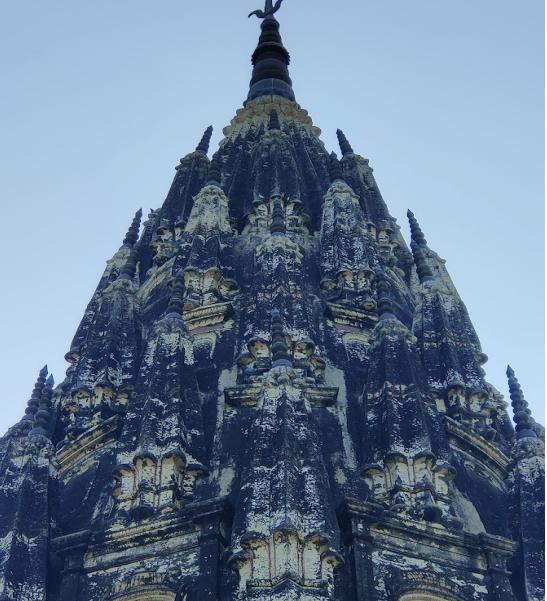
In the Lalganj Tehsil of Raebareli District, Uttar Pradesh — a place locally known as "Mini Kashi" — lies a cluster of 18 ancient Shivalayas, long unexplored, neglected and ignored by mainstream restoration drives. VARISTH Global Foundation, in collaboration with IIT Roorkee, has been undertaking the meticulous scientific renovation of these temples as a cohesive cultural and ecological ecosystem, not as isolated monuments.
Each Shivalaya is co-located with a sarovar (sacred pond), sarai (rest-house), and traditional wells — together forming a self-contained pilgrim infrastructure that once served devotees, locals, and travellers passing through the Indo-Gangetic plain.
This region also bears the legacy of the First War of Indian Independence (1857). The Honourable Chief Minister of Uttar Pradesh has recently sanctioned an auditorium in the district to honour legendary freedom fighter Rana Beni Madhav — and through Behta Kalan, the glory of the freedom struggle is restored alongside heritage tourism development.
The result of VARISTH's efforts: a cluster of 11 temples in the region has been formally recognised and adopted by the UP State Directorate of Archaeology — alongside support for school education, recharge and rebuilding of traditional water resources, and livelihood generation in Raebareli district.
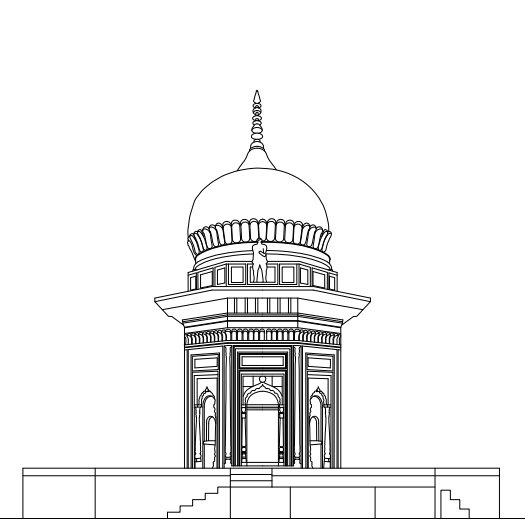
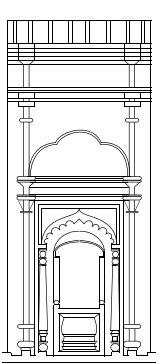
A team of 30 student architects from IIT Roorkee's Department of Architecture & Planning — led by Dr. Ram Sateesh Pasupuleti — undertook a three-day field documentation mission at Behta Kalan in March 2023. They measured, sketched, and photographed each of the 18 temples in the cluster, producing the basis of UP's first integrated heritage atlas under the VARISTH-Archaeology MOU.
The IIT Roorkee field mission produced a structured set of deliverables — moving Behta Kalan from anonymity into the UP State's official heritage portfolio.
Architectural measured-drawings, photogrammetric documentation, material analysis, and phased restoration plan for the 18 temple cluster.
Letter forwarded for tourism integration and cluster development funding under the heritage corridor framework.
Through this work, eleven of the eighteen documented temples were formally recognised and adopted by the State Directorate of Archaeology — a rare instance of academic-civil-society work directly shaping state policy.
Proposed collaboration with IIT Roorkee on Behta Kalan, Raebareli, to develop the site under a cluster development programme and link it with the regional tourism circuit.
Each Shivalaya's sarovar (sacred pond) is being studied for ecological restoration. Pond cleaning via microbial treatment proposed in collaboration with VSPL (Vasudha Sanrakshan Pvt Ltd).
Heritage walks proposed as candidate-walks in the NCC curriculum. Students from local schools engaged in stewardship — building inter-generational ownership.
This is restoration, not renovation. Patience is the name of the game. The right material, the right craftsmen, the right time — and the right respect for what came before.— Restoration philosophy · ICOMOS-India aligned
Building on the success at Behta Kalan, VARISTH's heritage documentation pipeline now includes:
The vision: build UP's first integrated heritage atlas under the VARISTH-Archaeology MOU.
Seven of the eighteen documented temples await formal adoption. Restoration cost per temple: ₹5–8 Lakh. Corporate CSR partners welcome under Schedule VII Item (v) — National Heritage.